
You have no items in your shopping cart.

How Collagen Signalling Declines After 30

Why Firmness Changes and What Actually Improves It
Collagen loss does not begin in midlife. It begins quietly in your late twenties and becomes more noticeable throughout your thirties.
By the age of 30, collagen production starts to decline gradually each year. What changes is not only the amount of collagen in the skin, but the strength of the biological signals that tell your skin to produce new collagen. This is known as collagen signalling.
As signalling weakens, the skin’s internal structure begins to shift. Elasticity softens. Fine lines linger. Recovery from inflammation slows. Skin may appear slightly thinner or less resilient.
Understanding this process changes how we approach firmness.
The goal is not simply to replace collagen. It is to restore the signalling pathways that maintain it.

What Is Collagen Signalling
Collagen is produced by fibroblast cells in the dermis. These cells rely on chemical signals to stimulate the creation of new structural proteins. When signalling is strong, the skin maintains density and elasticity. When signalling slows, collagen production becomes inconsistent and less efficient.
Several factors accelerate this decline:
Ultraviolet exposure that disrupts collagen fibres
Hormonal shifts, particularly declining estrogen
Barrier damage that increases inflammatory stress
Reduced cellular renewal
The issue isn’t lack of moisture alone.It’s barrier and cellular disruption.

Dr Garry Cussell
Founder & Formulation Director, Rejuvaus
“After 30, collagen loss is less about depletion and more about communication. The skin still has the machinery to produce collagen, but the signals become weaker.
The key is stimulating renewal while maintaining barrier integrity so the skin can rebuild itself consistently.”

Why Hydration Alone Is Not Enough
Moisturiser improves surface smoothness by increasing water content in the upper layers of the skin. This can temporarily soften the appearance of fine lines.
However, hydration does not stimulate fibroblast activity or encourage new collagen formation.
To meaningfully improve firmness, the skin requires ingredients that activate renewal pathways and reinforce structural support.
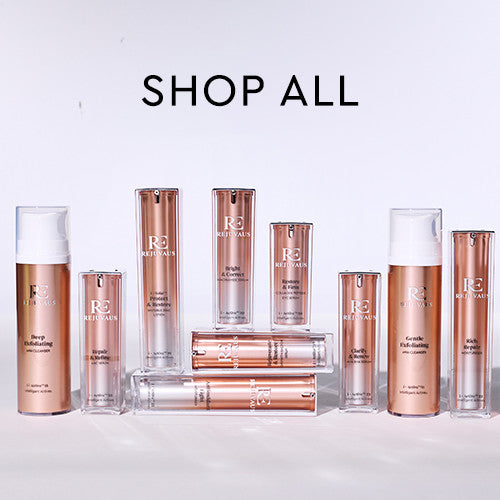
The Rejuvaus Approach to Supporting Collagen After 30
Renewal, regeneration, peptide signalling and barrier reinforcement must operate in balance.
What Customers Notice and When

Collagen support is progressive. Results build gradually with consistency.
Within three to four weeks, many customers report improved hydration and skin bounce.
By six to eight weeks, texture appears smoother and fine lines look softer.A
After twelve weeks of consistent use, skin often feels firmer and more resilient.

“I used to switch products constantly. With Rejuvaus, my skin feels stronger and more even.”
“My skin finally stopped feeling reactive. I didn’t realise my old moisturiser was just masking dryness.”
“This was the first routine where my skin improved over time, not just for a few hours.”
Can Skincare Really Improve Collagen
Skincare cannot replicate surgical lifting.
It can significantly support collagen stimulation, improve density, refine texture and enhance elasticity when used consistently.

The most important factor is sustainability. Controlled renewal combined with barrier reinforcement produces visible improvement over months, not days.
After 30, firmness is not restored through intensity. It is restored through disciplined, consistent signalling support and barrier protection working together.
Collagen declines gradually. The solution should be equally considered.